You find hair in the shower, on your brush or across your clothes and immediately think:
My hair is falling out.
But what you are seeing may not actually be hair loss.
It could be shedding from the root, or it could be breakage somewhere along the hair fibre.
They may look similar at first, but they need very different care.
The easiest place to start is this:
Shedding happens from the scalp. Breakage happens along the strand.
Hair Shedding vs Breakage: The Quick Difference
| What you notice | More likely |
|---|---|
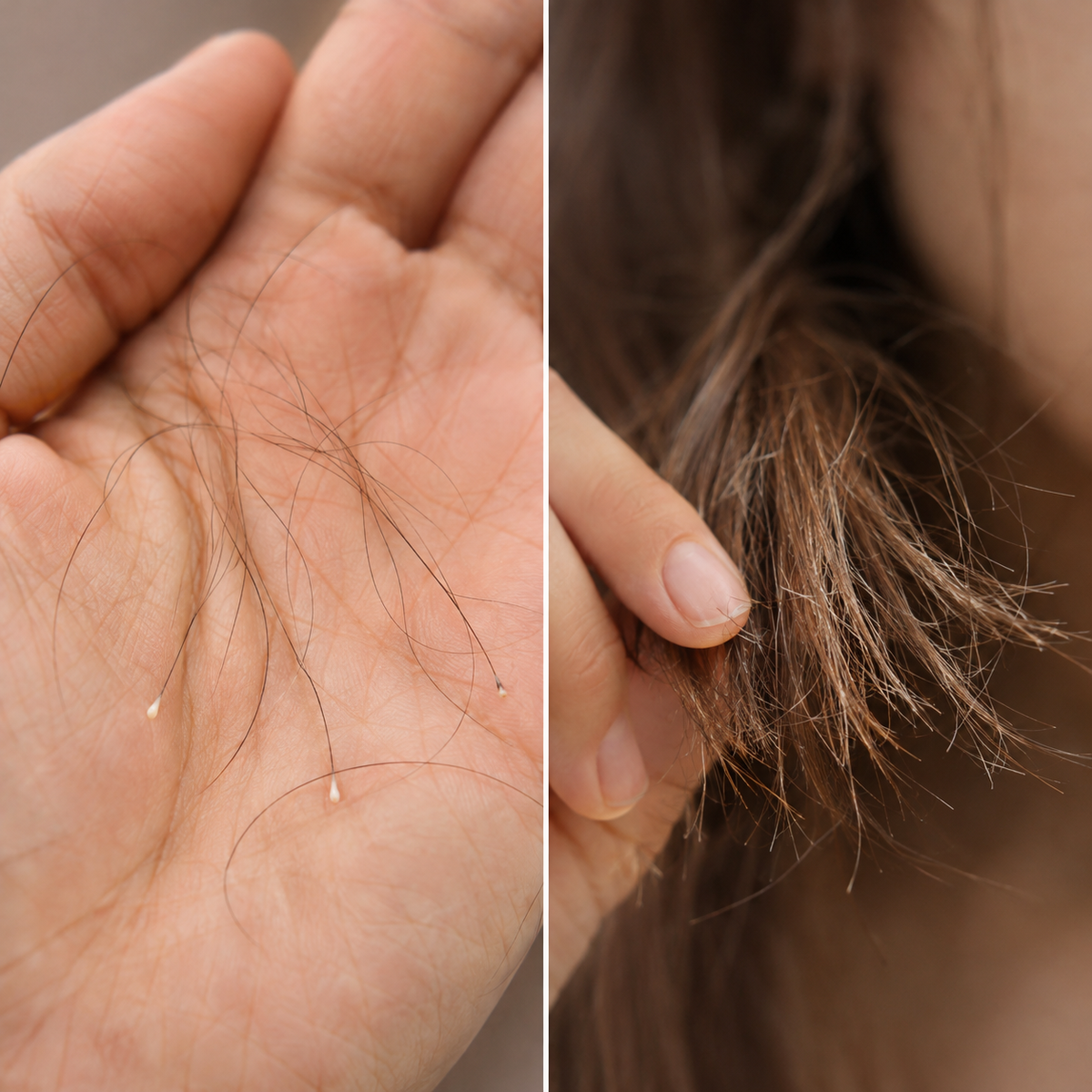
| Full-length strands | Shedding |
| A small pale bulb at one end | Shedding |
| Shorter pieces of different lengths | Breakage |
| Frayed or split ends | Breakage |
| Overall density feels reduced | Increased shedding or hair loss |
| Ends look thinner, rough or uneven | Breakage |
Normal shedding is part of the hair-growth cycle. The American Academy of Dermatology notes that losing around 50 to 100 hairs per day can be normal.
Breakage is different. The hair fibre snaps before reaching the end of its natural cycle.
And yes—you can experience both at the same time.
What Does Hair Shedding Look Like?
A shed hair usually comes away as a full strand.
You may notice:
-
Longer strands in the shower
-
Hair on your pillow or clothes
-
More full-length hairs in your brush
-
A small pale or translucent bulb at one end
-
Your ponytail gradually feeling less full if shedding increases significantly
Temporary increases in shedding can happen after events such as illness, high stress, childbirth, significant weight change or other changes affecting the hair-growth cycle.
Not every increase means permanent hair loss.
But sudden, persistent or progressive changes deserve closer attention.
What Does Hair Breakage Look Like?
Breakage usually leaves hair of different lengths.
Look for:
-
Short snapped strands
-
Uneven ends
-
Split ends
-
Rough texture
-
Increased frizz
-
Hair snapping while brushing or styling
-
Difficulty retaining length even though your hair is still growing
Heat styling, bleaching, chemical processing, friction, aggressive brushing and tight hairstyles can all contribute to fibre damage and breakage. Dermatologists also recommend minimizing excessive heat and handling wet hair carefully because damaged hair is more fragile.
The Simple Strand Check
Take a closer look at one of the hairs you find.
If it is a full-length strand with a small bulb at one end:
It has most likely shed from the root.
If it is noticeably shorter than the rest of your hair:
It is more likely to have broken somewhere along the strand.
This is not a medical diagnosis, but it can help you understand where to start.
If It Is Shedding: Focus on the Scalp and Growth Routine
If your concern is increased shedding from the root rather than snapped lengths, the focus should shift toward the scalp and hair-growth cycle.
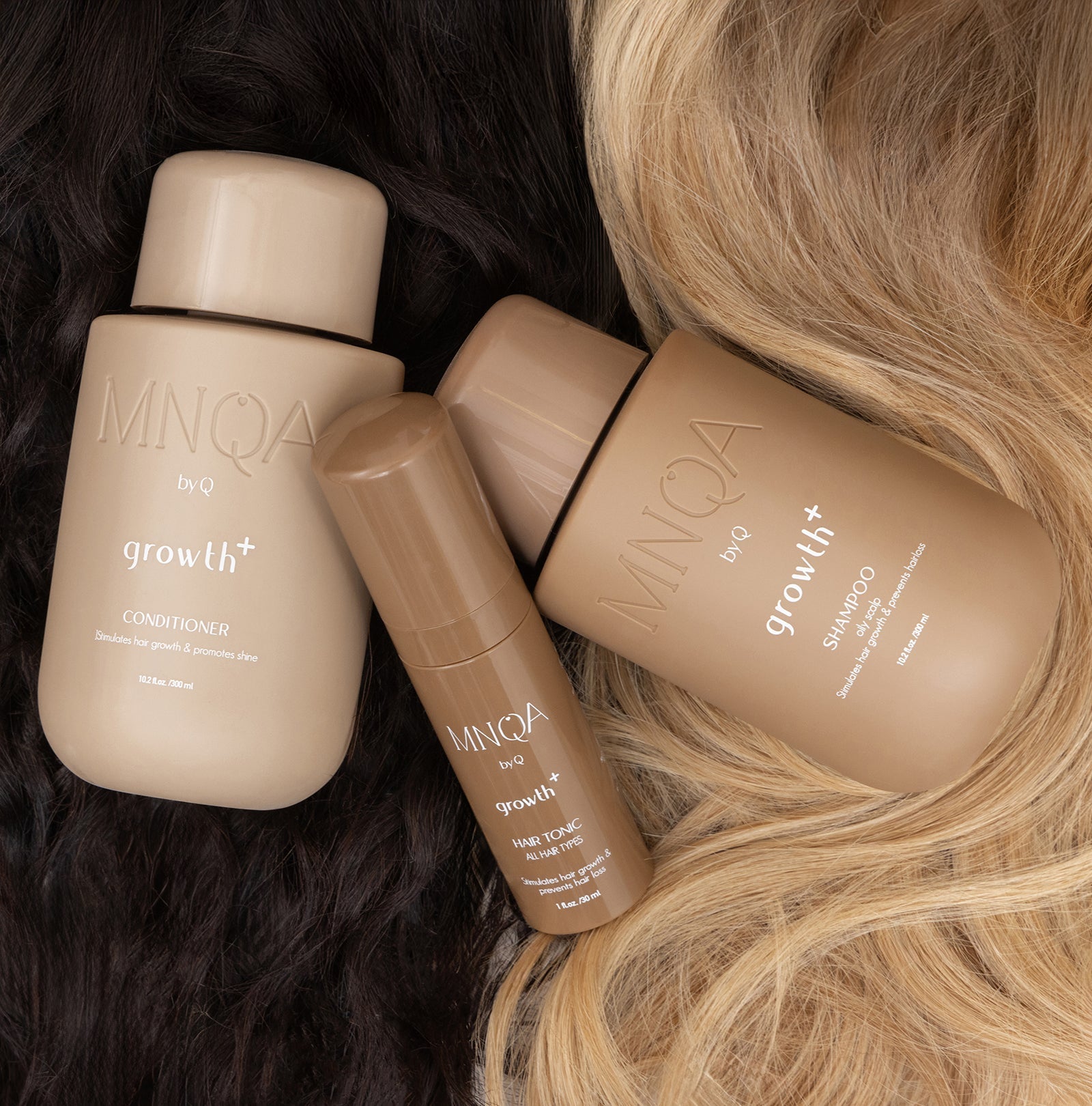
This is where the MNQA Growth routine fits.
The Growth line is designed as a consistent scalp and hair-care ritual for customers focused on shedding, thinning appearance and stronger-, fuller-looking hair.
Your Growth routine
Growth+ Shampoo → Growth+ Conditioner → Growth Tonic
Consistency matters more than repeatedly changing products.
Your shampoo keeps the scalp and hair clean.
Your Conditioner supports softness and manageability.
Your Growth Tonic becomes the leave-in scalp step in the routine.
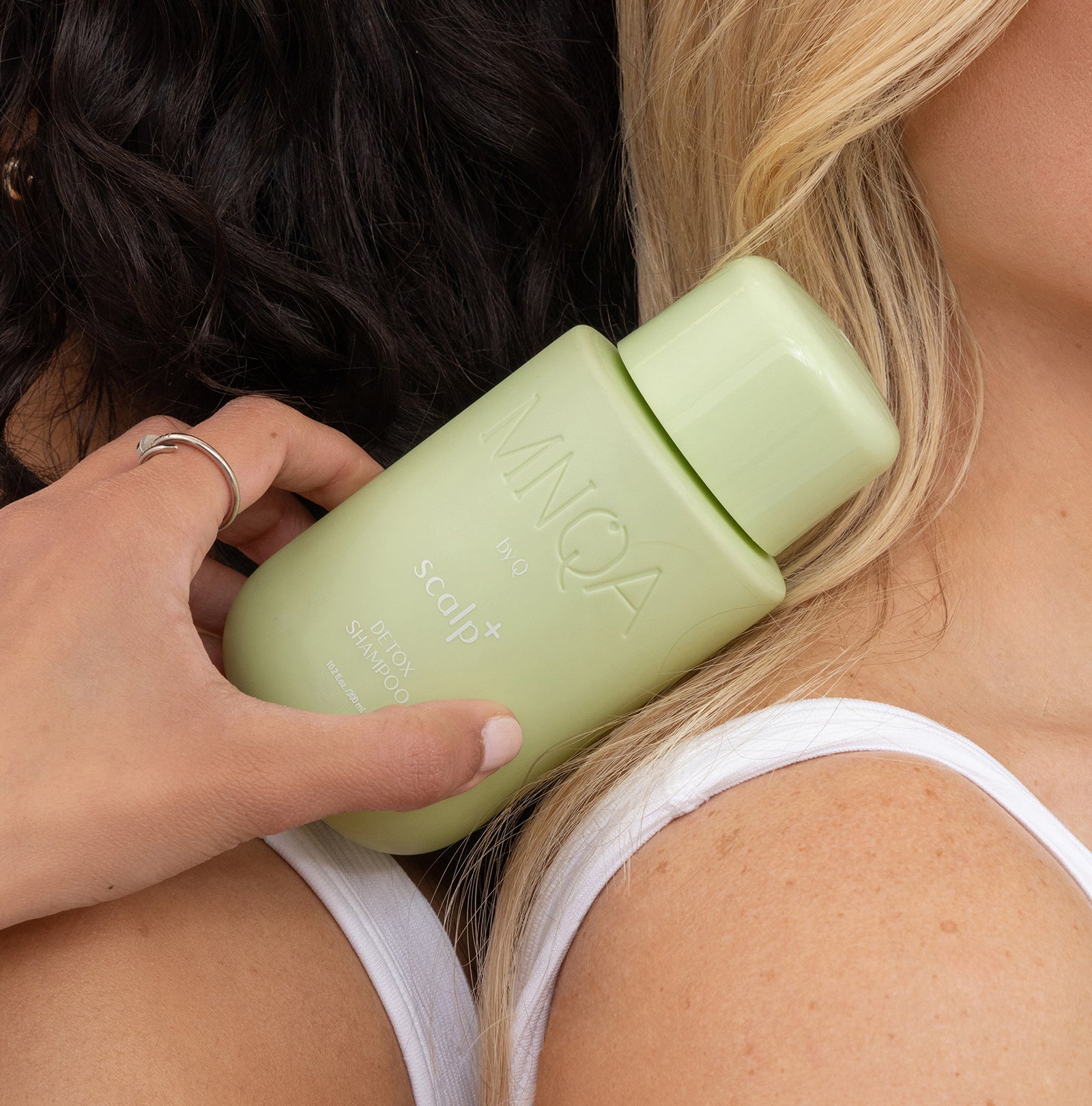
If your scalp also feels oily, heavy or coated, you can add Detox Shampoo once weekly before Growth+ Shampoo.
Weekly Growth reset
Detox → Growth+ Shampoo → Growth+ Conditioner → Growth Tonic
Detox is the reset step.
Growth remains the regular routine.
When Shedding Needs Professional Assessment
A cosmetic routine cannot diagnose the cause of increased shedding.
Speak to a dermatologist or appropriately qualified professional if you notice:
-
Sudden heavy shedding
-
Bald or clearly defined patches
-
A widening part
-
Progressive reduction in density
-
Scalp pain, burning or significant inflammation
-
Loss of eyebrows or eyelashes
-
Shedding that continues or worsens
Dermatologists can distinguish between excessive shedding and different forms of hair loss and investigate the underlying cause.
If It Is Breakage: Focus on the Hair Fibre
If the hair is snapping through the lengths, adding more scalp products will not solve the main problem.
The lengths need:
conditioning, protection and gentler handling.
That is where the Butter+ routine becomes more relevant.
Step 1: Cleanse with Butter+ Shampoo
Use Butter+ Shampoo when dryness, frizz and damaged-feeling lengths are part of the concern.
Focus shampoo around the scalp and allow the lather to rinse through the lengths rather than aggressively rubbing the ends.
Step 2: Treat with Crème de la Crème Mask
If your hair feels dry, rough or fragile, add Crème de la Crème Mask one to two times weekly.
Use it through the mid-lengths and ends to support:
-
Moisture
-
Softness
-
Flexibility
-
Manageability
-
Resistance to avoidable breakage
Step 3: Follow with Butter+ Conditioner
Conditioner is your regular smoothing step.
After the Mask, apply Butter+ Conditioner through the mid-lengths and ends to support softness, detangling and frizz control.
Step 4: Protect with Cloud Sealing Water
Breakage prevention does not stop in the shower.
Use Cloud Sealing Water before heat styling and daily environmental exposure.
It provides lightweight hydration alongside tested heat and UV protection while helping the hair feel smoother and easier to manage.
Leave-in conditioning can be particularly useful for dry, frizzy, heat-styled and colour-treated hair.
Your breakage-support routine
Butter+ Shampoo → Mask → Butter+ Conditioner → Cloud
What If You Have Shedding and Breakage Together?
This is common.
You may be shedding from the root while your remaining lengths are also becoming damaged from heat, colour, friction or dryness.
In that case, do not choose one problem and ignore the other.
Treat the scalp and lengths separately.
Scalp:
Growth+ Shampoo → Growth+ Conditioner → Growth Tonic
Add Detox weekly if buildup is present.
Lengths:
Use Crème de la Crème Mask where needed and finish with Cloud Sealing Water for protection.
The important point is placement.
Growth supports the scalp-focused routine.
Butter supports the lengths.
You do not need to overload every part of the hair with every product.
Common Causes of Hair Breakage
Breakage often becomes worse with repeated stress rather than one single event.
Common contributors include:
-
Frequent straightening or curling
-
High blow-dryer temperatures
-
Bleaching or chemical treatments
-
Tight hairstyles
-
Rough detangling
-
Aggressive towel drying
-
Dry or poorly conditioned hair
-
Repeated sun exposure
-
Friction while sleeping or styling
Small changes can make a noticeable difference.
Use lower heat.
Detangle from the ends upward.
Avoid pulling tight hairstyles every day.
Condition consistently.
Protect before styling.
Frequently Asked Questions
Is hair in the shower always shedding?
No.
You may find both shed hairs and broken strands during washing.
Look at the length of the strand and whether a small bulb is visible at one end.
Can hair breakage make my hair look thinner?
Yes.
Repeated breakage can reduce fullness through the lengths and make the ends look thinner or uneven.
That is different from losing density directly from the scalp.
Can dry hair cause breakage?
Dryness can make already fragile hair feel rougher and more vulnerable to snapping, particularly when combined with heat, chemicals or friction.
Which MNQA line should I use for shedding?
Use the Growth routine when the concern is scalp-focused shedding or thinning appearance.
Persistent or significant changes should also be professionally assessed.
Which MNQA line should I use for breakage?
Use Butter+ when the main concern is dry, frizzy, damaged or breakage-prone lengths.
The Mask and Cloud are especially important because treatment and protection address different stages of the routine.
Can I use Growth and Butter together?
Yes.
If your scalp needs Growth support but your lengths are dry or damaged, use the products according to area and purpose.
You can maintain your Growth scalp routine while using the Butter Mask and Cloud through the lengths.
Root or Strand? Start with the Right Question
Seeing hair fall can be worrying, but before changing your entire routine, look at where the hair is coming from.
If the full strand is releasing from the scalp, think shedding.
If the hair is snapping through the lengths, think breakage.
And if both are happening, treat them as two different needs.
For the scalp: Growth.
For damaged lengths: Butter+.
For buildup: Detox when needed.
Understanding the difference helps you stop guessing and build a routine around what your hair is actually telling you.