Hair loss can feel overwhelming, especially when you start noticing more hair in the shower, on your brush, or around your hairline. But not every strand you see means permanent hair loss.
Sometimes it is normal shedding. Sometimes it is breakage. Sometimes it is a scalp or growth-cycle issue. The first step is understanding what your hair is trying to tell you.
Most people naturally shed around 50 to 100 hairs a day, but sudden changes, visible thinning, widening part lines, patchy loss, or slower growth may need closer attention. Hair loss can be linked to genetics, stress, hormonal changes, medical conditions, nutrition, tight hairstyles, scalp health, or recent illness.
Hair Shedding vs Hair Loss vs Breakage
Before choosing a routine, it helps to know what you are dealing with.
Hair shedding usually means full strands are coming out from the root. This can happen when the hair cycle is disrupted by stress, illness, postpartum changes, thyroid changes, low iron, crash dieting, low protein intake, or certain medications. This type of shedding is often linked to telogen effluvium, where more hairs shift into the resting phase at the same time.
Hair loss or thinning usually appears as reduced density over time. You may notice a wider part, thinner ponytail, more visible scalp, or gradual thinning around specific areas. Pattern hair loss is one of the most common forms of hair loss in both men and women, and female pattern hair loss becomes more common with age.
Hair breakage is different. The hair may snap along the strand because of dryness, heat styling, bleach, friction, tight brushing, or weak hair fibers. With breakage, you may see shorter pieces instead of full strands from the root.
What Causes Hair Loss or Excessive Shedding?
There is no single cause of hair loss. That is why a one-product answer is rarely enough.
Common triggers include:
- Genetics or pattern hair loss
- Stress or emotional shock
- Recent illness or fever
- Hormonal changes
- Postpartum changes
- Thyroid changes
- Low iron or low protein intake
- Crash dieting or rapid weight loss
- Tight hairstyles or extensions
- Scalp buildup or inflammation
- Certain medications
- Over-processing, heat, or chemical damage
The key is to look at the pattern. Did the shedding start suddenly? Is the scalp visible? Is the hair snapping? Is your scalp oily, itchy, flaky, or congested? These details help point you in the right direction.
When Should You Ask a Specialist?
A scalp-first routine can support healthier-looking hair, but some signs should be checked by a dermatologist, doctor, or trichologist.
Consider getting professional advice if you notice:
- Sudden heavy shedding
- Patchy hair loss
- Burning, pain, scaling, or wounds on the scalp
- Rapid thinning
- Hair loss after starting a new medication
- Hair loss with fatigue, irregular periods, or other body symptoms
- Shedding that continues for several months without improvement
This matters because hair loss is not always cosmetic. Sometimes it is connected to internal health, hormones, nutrition, or scalp conditions.
Why Scalp Health Matters for Growth
Healthy-looking hair starts with the scalp environment. The scalp is where the hair follicle sits, so buildup, oil, sweat, styling residue, pollution, and poor cleansing habits can make the routine feel less effective.
A good growth-support routine should focus on:
- Cleansing the scalp properly
- Keeping the hair fiber conditioned
- Applying scalp-focused products consistently
- Reducing unnecessary tension and breakage
- Giving the routine enough time to show visible changes
Hair growth routines need consistency. A product used once or twice will not tell you much. Most customers need to follow a routine for several weeks before they can fairly judge changes in shedding, scalp comfort, and the appearance of density.
Where to Start: A Simple Growth Routine
If your concern is shedding, thinning, or slow growth, start with a simple routine that you can repeat.
Step 1: Cleanse the Scalp
Use a scalp-focused shampoo to cleanse away oil, sweat, and buildup. A clean scalp helps the rest of the routine feel more effective and keeps the hair feeling fresh at the root.
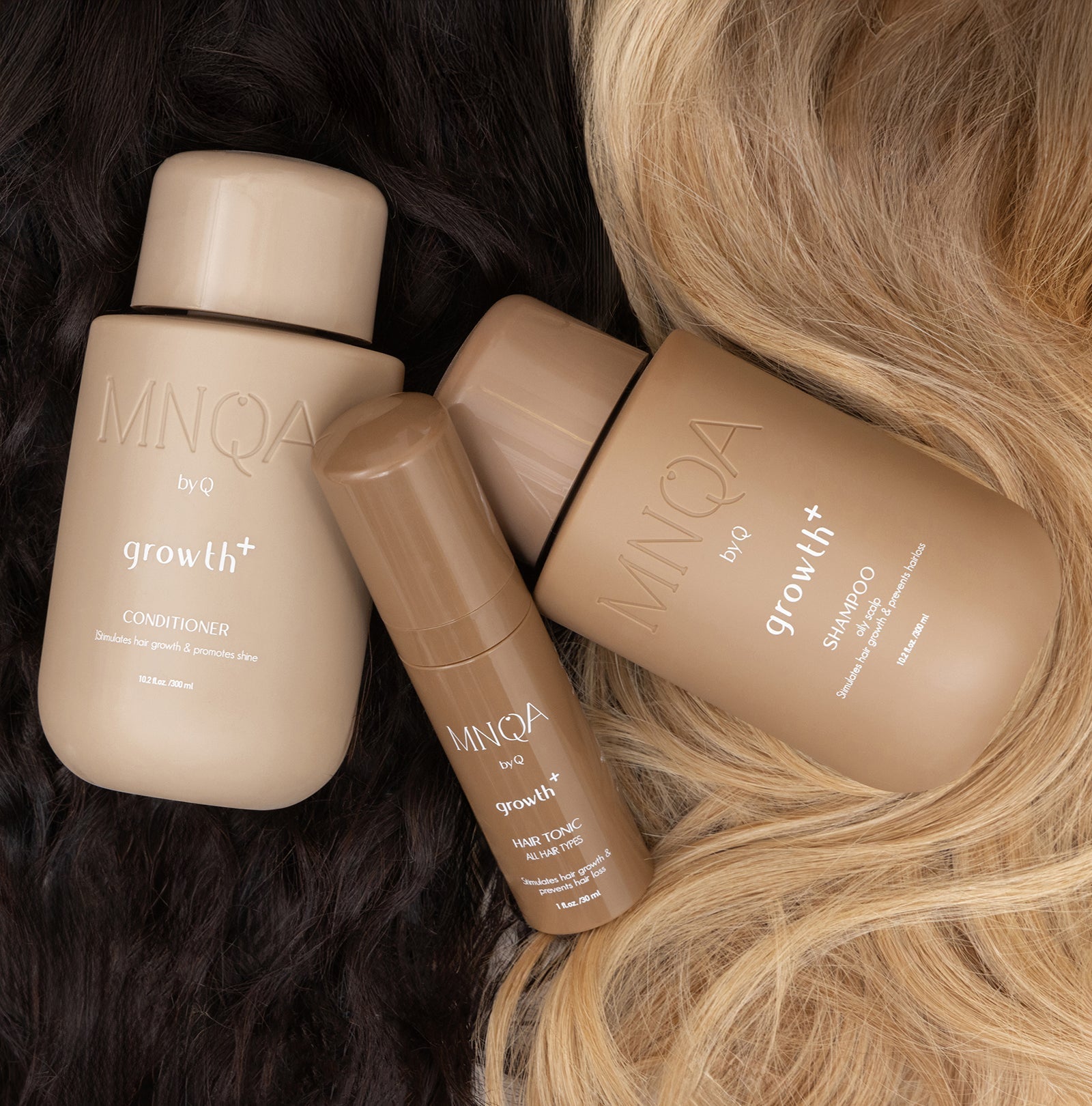
MNQA Routine Step: Growth Shampoo
Step 2: Condition the Lengths
Do not skip conditioner. When hair feels weak or thin, customers sometimes avoid conditioner because they fear heaviness. But dry, tangled hair is more likely to break. Focus conditioner on the mid-lengths and ends.
MNQA Routine Step: Growth Conditioner
Step 3: Be Consistent With Scalp Care
A scalp tonic should be used consistently as part of the routine. The goal is not an overnight result. The goal is to support the scalp environment and help customers stay committed to a long-term growth ritual.
MNQA Routine Step: Growth Tonic
MNQA Growth Routine
For customers who are not sure where to start, the MNQA Growth routine is designed as a simple scalp-first ritual:
Cleanse: Growth Shampoo
Condition: Growth Conditioner
Support: Growth Tonic
This routine is best for customers who are concerned about shedding, thinning-looking hair, slow growth, or wanting to stay consistent with scalp care.
Final Takeaway
Hair loss can have many causes, but the first step is not panic. Start by understanding whether you are seeing shedding, thinning, breakage, or slow growth.
If the issue is sudden, severe, patchy, or linked to other symptoms, speak to a specialist. If your goal is to build a consistent routine, start with the scalp, reduce breakage, and give your hair time to respond.
Your growth routine should be simple enough to repeat — because consistency is what makes the ritual work.
Not sure where to start?
Start with a scalp-first routine designed for shedding, thinning-looking hair, and slow growth concerns.
FAQ Section
FAQ 1
Question: How much hair shedding is normal?
Answer: Many people naturally shed around 50 to 100 hairs per day. If you notice sudden heavy shedding, visible thinning, or a major change from your normal pattern, it may be worth checking with a specialist.
FAQ 2
Question: What is the difference between hair shedding and hair loss?
Answer: Hair shedding usually means more full strands are falling from the root. Hair loss or thinning usually appears as reduced density, a wider part, a thinner ponytail, or more visible scalp over time.
FAQ 3
Question: Can stress cause hair shedding?
Answer: Yes. Stress, illness, hormonal changes, low iron, low protein intake, and crash dieting can trigger increased shedding in some people.
FAQ 4
Question: Can scalp buildup affect hair growth?
Answer: Scalp buildup can make the scalp feel oily, congested, or uncomfortable. A consistent scalp-cleansing routine helps create a cleaner environment for your haircare routine.
FAQ 5
Question: How long does a growth routine take to show results?
Answer: Hair routines require consistency. Visible changes can take time because hair grows gradually and shedding patterns may shift slowly. Use the routine consistently before judging results.
FAQ 6
Question: When should I see a dermatologist or trichologist for hair loss?
Answer: Seek professional advice if you have sudden heavy shedding, patchy hair loss, scalp pain, scaling, rapid thinning, or hair loss with other body symptoms.