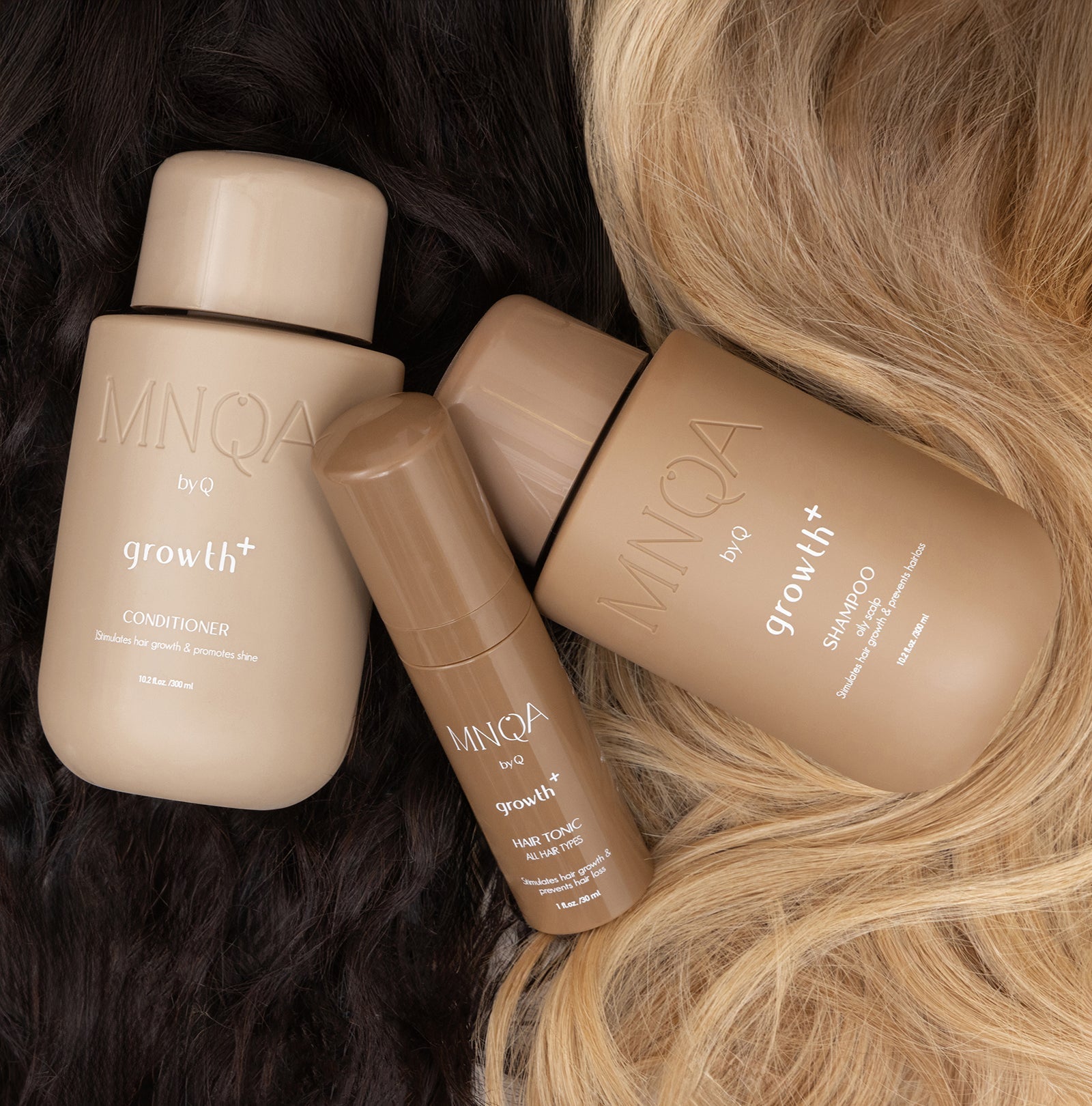

Your Growth Ritual, Step by Step

Step 1: Reset
Detox Shampoo
A deep cleanse for scalp & hair that needs a fresh start.
Step 1: Reset
Detox Shampoo
A deep cleanse for scalp & hair that needs a fresh start.
Clarifying shampoo for buildup & excess oil


Step 2: Cleanse
growth+ shampoo
Start at the roots. Cleanse your scalp and get your growth ritual going.
Step 2: Cleanse
growth+ shampoo
Start at the roots. Cleanse your scalp and get your growth ritual going.
Your everyday cleanse for the growth+ routine


Step 3: Soften
growth+ conditioner
Keep your lengths soft, smooth & easy to detangle.
Step 3: Soften
growth+ conditioner
Keep your lengths soft, smooth & easy to detangle.
Conditioning care for softer, more manageable hair


Step 4: Boost
growth+ tonic
Give your scalp a little daily attention. Keep the ritual going between washes.
Step 4: Boost
growth+ tonic
Give your scalp a little daily attention. Keep the ritual going between washes.
Daily scalp care to complete your growth+ routine


Let customers speak for us
MNQA Rituals


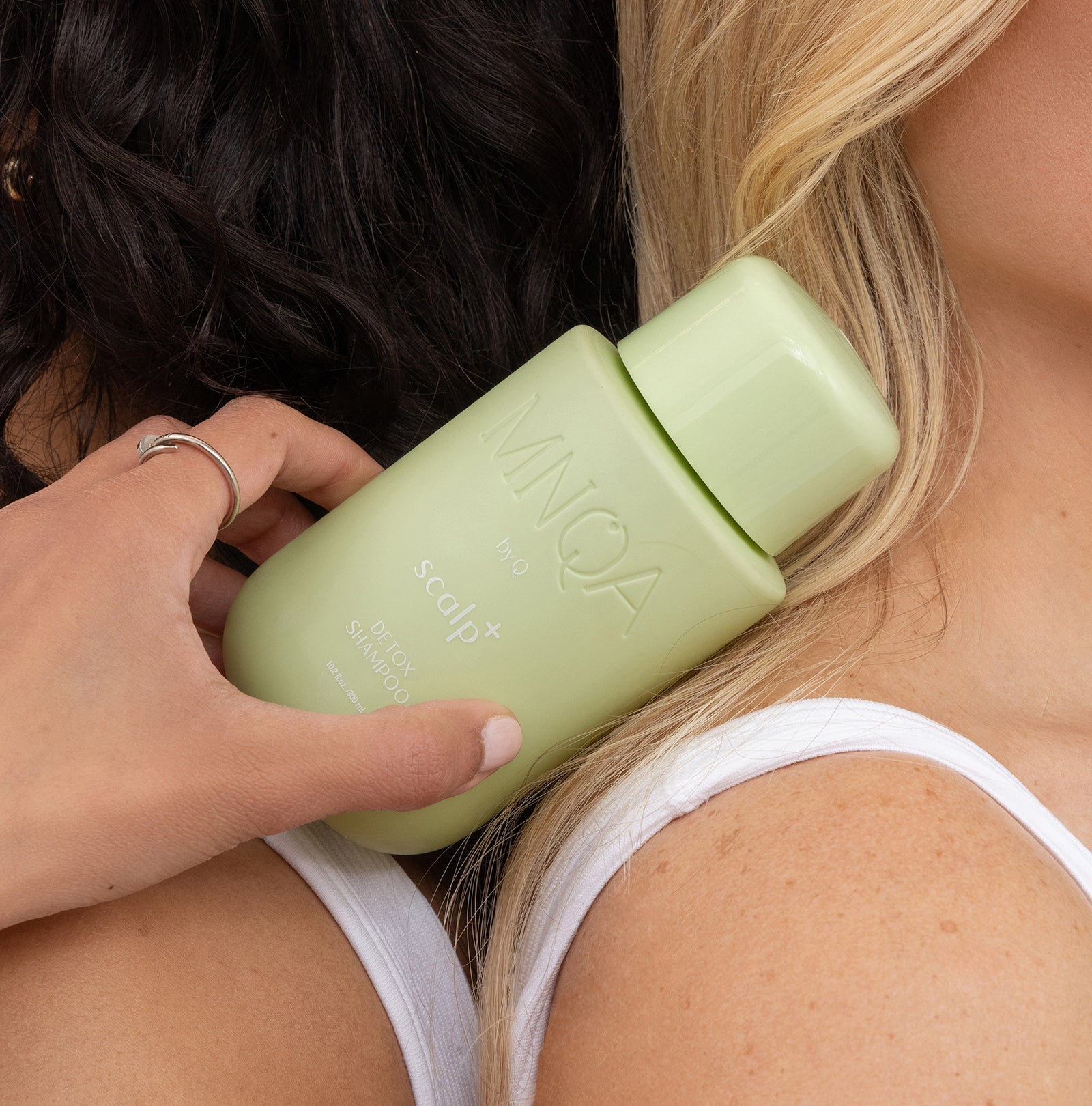


Your Ritual for dry and frizzy hair


Type: Leave in
butter+ Cloud Sealing Water


Type: Mask
Butter+ Crème de la crème Mask


Fill. Pack. Go.
Empty mini bottles, ready to fill with your MNQA favorites. Your ritual, wherever you go.

Blog posts

Oily Roots, Dry Ends? How to Fix Combination Hair Without Drying It Out
Your roots look oily again, but your ends still feel dry. So you wash more often. Your scalp feels cleaner—but now your lengths feel even rougher. Sound familiar? You probably do not have one hair problem. You have two different needs happening in two different places. The solution is not to treat your whole head as oily or your whole head as dry. Cleanse the scalp. Hydrate the lengths. Protect the ends. That is the basis of a good routine for combination hair. Why Are My Roots Oily but My Ends Dry? Your scalp naturally produces oil, while your ends are the oldest part of your hair. Those ends have also been exposed to more: Washing Brushing Heat styling Sun Humidity Colouring or bleaching Friction This means the scalp can feel oily while the lengths remain dry, rough or frizzy. The contrast may be even stronger if your hair is long, curly, wavy, coloured or frequently heat styled. This is often described as combination hair. And the biggest mistake is treating both areas exactly the same way. Should You Use a Stronger Shampoo for Oily Roots? Not necessarily. Your shampoo should remove excess oil and residue from the scalp, but your dry lengths do not need aggressive cleansing every time you wash. Focus shampoo mainly around the scalp and roots. As you rinse, the lather will move through the lengths. If your scalp regularly feels coated, heavy or loaded with styling products, adding a deeper cleanse periodically can help. That is where Detox Shampoo comes in. Step 1: Reset Oily, Heavy Roots with Detox Shampoo MNQA Detox Shampoo is a weekly pre-shampoo treatment designed to remove excess oil, dead skin and product buildup from the scalp. It is especially useful if you: Have oily or heavy roots Use dry shampoo frequently Exercise or sweat often Use styling products Feel buildup even after your usual wash Are exposed regularly to dust and pollution Detox is not your everyday shampoo. Use it once weekly before your regular shampoo. How to use it Apply Detox Shampoo directly to the wet scalp. Massage gently for 60 seconds, leave it for another 60 seconds, then rinse. Follow with your regular shampoo. Reset with Detox Step 2: Cleanse Without Forgetting Your Dry Ends For combination hair where dryness and frizz are also major concerns, follow Detox with Butter+ Shampoo. Butter+ Shampoo is designed to cleanse while supporting the hair's moisture balance. Its lightweight formula contains fermented rice water, hyaluronic acid, argan oil and shea butter and is designed to leave hair soft and manageable without a heavy finish. It is particularly useful when your scalp needs cleansing but your lengths already feel dry. On regular wash days when you are not using Detox, use Butter+ Shampoo on its own. Concentrate the massage around the scalp rather than aggressively rubbing the ends. Cleanse with Butter+ Shampoo Step 3: Treat the Dry Part of Your Hair Where It Actually Needs It If your roots are oily, it can be tempting to avoid rich treatments completely. That often leaves the ends untreated. Instead, change where you apply the product. Use Crème de la Crème Mask through the mid-lengths and ends—not on the roots. The Mask is designed for hair that feels: Dry Frizzy Rough Dull Damaged from heat Colour-treated Prone to tangling or breakage Use it one to two times weekly after Butter+ Shampoo. Leave it on for four to five minutes, or up to ten minutes when the lengths feel especially dry or stressed. Your oily scalp does not mean your dry ends should miss out on treatment. Treat with Crème de la Crème Mask Step 4: Condition the Lengths, Not the Roots Follow with Butter+ Conditioner, concentrating from the mid-lengths to the ends. Butter+ Conditioner supports hydration, smoothness, shine and frizz control without needing to be applied around an already-oily scalp. This small change in placement can make a big difference. Instead of choosing between fresh roots and soft ends, treat each area according to what it needs. Condition with Butter+ conditioner Step 5: Keep Leave-In Products Away from the Roots After washing, finish with Cloud Sealing Water through the mid-lengths and ends. Cloud is a lightweight leave-in that supports hydration, smoothness and frizz control while providing tested heat and UV protection. Because it is designed to feel weightless, it is particularly useful when you want protection and hydration without making oily roots feel heavier. Apply it to towel-dried hair before styling. You can also use a light amount on dry hair between washes when the ends need refreshing. Seal It with Cloud Sealing Water The MNQA Routine for Oily Roots and Dry Ends Regular wash day Butter+ Shampoo → Butter+ Conditioner → Cloud Sealing Water If your lengths need deeper treatment: Butter+ Shampoo → Crème de la Crème Mask → Butter+ Conditioner → Cloud Weekly reset day Detox Shampoo → Butter+ Shampoo → Crème de la Crème Mask → Butter+ Conditioner → Cloud The key is placement: Detox and shampoo: scalp and roots. Mask, Conditioner and Cloud: mainly mid-lengths and ends. Two zones. Two different needs. Shop full ritual Should You Wash Oily Roots Every Day? There is no universal wash schedule. Wash according to how your scalp actually feels, your activity level, climate and styling routine. Someone who exercises daily or lives in a hot, humid climate may need to wash more frequently than someone whose scalp remains comfortable for several days. The important part is using the right product in the right place rather than trying to extend wash days at all costs. Why Are My Ends Still Dry Even Though My Scalp Is Oily? Oil at the scalp does not automatically mean enough of that oil reaches the ends. The ends are older and have experienced more environmental exposure, brushing and styling. They may therefore need separate conditioning and protection even when the roots feel oily. This is why combination hair often responds better to a zoned routine instead of one product being expected to solve everything. Frequently Asked Questions Is oily roots and dry ends a hair type? It is commonly called combination hair. It describes different needs in different areas: more oil around the scalp and dryness or damage through the lengths. Should I put conditioner on oily roots? If your roots become oily easily, concentrate Conditioner on the mid-lengths and ends instead. That gives the driest area the conditioning it needs without adding unnecessary product around the scalp. Can I use a hair mask if I have an oily scalp? Yes. Apply the Mask to the mid-lengths and ends rather than the scalp. Your scalp condition does not determine whether the lengths need deeper treatment. How often should I use Detox Shampoo? MNQA recommends once weekly, before your regular shampoo. It is a scalp-reset treatment rather than an everyday cleanser. Which MNQA Shampoo should I use for oily roots and dry ends? If dryness and frizz are your main hair concerns, use Butter+ Shampoo as your regular cleanser and add Detox Shampoo once weekly when the scalp needs a deeper reset. Why does my hair become oily so quickly but still frizz? Oil and frizz are different concerns. Your scalp can produce oil while your lengths remain porous, dry, damaged or affected by humidity. Treating the roots and ends separately usually makes more sense than trying to remove more oil from the entire hair length. Stop Treating Your Hair Like One Problem Oily roots do not mean you should dry out your ends. Dry ends do not mean you need to coat your scalp in richer products. Give each area what it actually needs: Reset the scalp with Detox.Cleanse gently with Butter+.Treat dry lengths with the Mask.Condition where you need softness.Seal and protect with Cloud. Your scalp and your ends do not need to agree. Your routine just needs to understand both. Balance Your Routine
Learn more
Hair Mask vs Conditioner: What’s the Difference and Which Comes First?
You shampoo your hair, reach for your conditioner—and then wonder where the hair mask fits. Do you use the Mask instead of Conditioner? Before it? After it? And do you really need both? The simple answer: Conditioner is your regular smoothing step. A hair mask is your deeper treatment step. When you use both in the MNQA Butter+ routine, the order is: Shampoo → Mask → Conditioner → Cloud Sealing Water. Here is why. What Does Conditioner Actually Do? Conditioner is designed to be used regularly after shampooing. Its main job is to make the hair feel smoother, softer and easier to manage after cleansing. A good conditioner can help: Reduce tangling Improve softness Smooth the hair surface Reduce friction during brushing Control frizz Improve shine and manageability Butter+ Conditioner is especially suited to dry, dehydrated or frizz-prone hair. Its formula includes Tsubaki oil, hyaluronic acid, fermented rice water, silk protein and conditioning oils to support hydration, softness and a smoother finish without heaviness. Think of Conditioner as the step that keeps your hair manageable after every wash. Get Buttered with Butter+ Conditioner What Does a Hair Mask Do? A hair mask is a more intensive treatment. If your usual Conditioner keeps your hair soft but your lengths still feel dry, rough, fragile or difficult to control, this is where a Mask becomes useful. Crème de la Crème Mask is designed for dry, frizzy, dull and damaged-feeling hair. It combines multi-weight hyaluronic acid, fermented rice water, hydrolyzed silk, plant proteins, argan oil and shea butter to support hydration, softness, flexibility, shine and manageability. Use a Mask when your hair feels: Very dry or dehydrated Rough through the lengths Frizzy even after conditioning Damaged from heat styling Stressed from colouring or chemical treatments More prone to tangling or breakage Dull and difficult to manage Think of your Mask as the treatment step, not simply a stronger Conditioner. Treat It with Crème de la Crème Hair Mask vs Conditioner: What’s the Difference? Hair Mask Conditioner Main purpose Deeper treatment Regular conditioning When to use 1–2 times weekly After every wash or as needed Where to apply Mid-lengths and ends Mid-lengths and ends How long 4–5 minutes, up to 10 for very dry hair At least 2 minutes Best for Dry, damaged, frizzy or stressed hair Regular softness, smoothness and detangling MNQA step Treat Condition They work differently, which is why one does not automatically make the other unnecessary. Which Comes First: Hair Mask or Conditioner? For the MNQA Butter+ routine, use the Mask first, then Conditioner. The correct order is: 1. Cleanse — Butter+ Shampoo Start by cleansing the scalp and hair with Butter+ Shampoo. 2. Treat — Crème de la Crème Mask Apply the Mask through the mid-lengths and ends. Leave it on for approximately four to five minutes. For very dry or damaged hair, it can be left for up to ten minutes. Rinse thoroughly. 3. Condition — Butter+ Conditioner Follow with Butter+ Conditioner through the mid-lengths and ends. Leave it on for at least two minutes and rinse. The Conditioner completes the wash-day conditioning step, helping the hair feel smoother, softer and easier to detangle. 4. Seal — Cloud Sealing Water Your routine does not finish in the shower. Apply Cloud Sealing Water to towel-dried hair as your leave-in protection step. Cloud provides lightweight hydration alongside tested UV and thermal protection, helping protect the hair from heat styling and daily environmental stress. Cleanse. Treat. Condition. Seal. That is the full Butter+ ritual. Do You Need a Hair Mask Every Time You Wash? Usually, no. MNQA recommends using Crème de la Crème Mask one to two times per week. Your hair may benefit most from regular Mask use if it is: Dry or frizzy Bleached or colour-treated Frequently heat styled Chemically treated Curly or textured Exposed regularly to sun, humidity, pool or sea water If your hair feels soft and manageable, there is no need to add more treatment simply because it is available. Listen to how your hair feels. Can You Use a Hair Mask Instead of Conditioner? Sometimes people use a Mask in place of Conditioner, but that is not the MNQA Butter+ routine. Crème de la Crème Mask and Butter+ Conditioner were designed as two different steps. The Mask provides the deeper treatment. The Conditioner follows to smooth, soften and improve manageability. For the full Butter+ result: Mask first. Conditioner second. Why Is My Hair Still Frizzy After Using Conditioner? Conditioner can improve frizz, but frizz is not always caused by one thing. Your hair may still become frizzy because of: Humidity Heat damage Bleaching or colouring High porosity Dryness Friction UV exposure Not using a leave-in protection step If Conditioner alone is no longer enough, add Crème de la Crème Mask for deeper treatment and finish with Cloud Sealing Water to support smoothness and protect the hair after washing. This is especially important if you use heat tools or live in a hot, humid climate. Can Fine Hair Use a Hair Mask? Yes—but placement and amount matter. Apply Crème de la Crème Mask mainly through the mid-lengths and ends rather than the roots. Start with a small amount and adjust according to your hair’s length, density and condition. A Mask should leave your hair feeling softer and more manageable—not coated or heavy. What If My Roots Are Oily but My Ends Are Dry? Treat the scalp and the lengths as two different areas. If your scalp has noticeable oil or product buildup, use Detox Shampoo once weekly, then follow with Butter+ Shampoo. Keep the Mask and Conditioner focused on the mid-lengths and ends. Your weekly routine becomes: Detox → Butter+ Shampoo → Mask → Conditioner → Cloud. This gives the scalp the reset it needs without denying dry lengths the hydration they need. Frequently Asked Questions Is a hair mask just a stronger conditioner? Not exactly. Both products condition the hair, but a Mask is designed as a more intensive treatment step, while Conditioner is intended for regular softness, smoothing and detangling. Should I shampoo after using a hair mask? No. In the MNQA routine, shampoo comes first. Use: Shampoo → Mask → Conditioner. How often should I use Crème de la Crème Mask? MNQA recommends one to two times weekly. If your hair is very dry or damaged, you can leave it on for up to ten minutes before rinsing. Should I apply the Mask to my scalp? Crème de la Crème Mask is designed primarily for the hair lengths. Concentrate it from the mid-lengths to the ends, especially where the hair feels driest or most damaged. Do I still need Cloud after the Mask and Conditioner? Yes, because Cloud performs a different job. The Mask treats.The Conditioner smooths.Cloud seals and protects. It is the leave-in step that takes your routine beyond the shower. Your Butter Routine, in the Right Order If your hair feels dry, frizzy or difficult to manage, you do not necessarily need more products. You need to know what each product is there to do. Cleanse with Butter+ Shampoo.Treat with Crème de la Crème Mask.Condition with Butter+ Conditioner.Seal and protect with Cloud Sealing Water. Four steps. Four different jobs. Get Buttered
Learn more
Hair Shedding, Hair Loss, or Slow Growth? A Trichologist-Led Guide to Where to Start
This blog should help you understand the difference between normal shedding, hair loss, breakage, and slow growth, then guide them toward a consistent scalp-first routine using the MNQA Growth line. Why is my hair falling out? Hair shedding vs hair loss Why is my hair thinning? Slow hair growth causes Best routine for hair fall Scalp routine for hair growth How to reduce hair shedding What causes hair loss in women?
Learn more